Losing a tooth can feel isolating, but tooth loss is far more common than most people realize. Research shows that 178 million Americans are missing at least one tooth, and 35 million have no natural teeth left at all, a condition dentists call being edentulous.
Teeth are lost for many reasons, including gum disease, tooth decay, and injuries from accidents or sports. No matter how you lost one tooth or several, the team at Corry Dental is here to help. We combine state-of-the-art care with modern tooth replacement options so you can enjoy a full, healthy, and attractive smile again.

Dental implants are the most advanced way to replace missing teeth available today. Traditional fixed bridges and dentures still work well and satisfy many patients. Even so, implants come closest to matching the appearance, feel, and everyday function of natural teeth.
Because an implant acts much like a natural tooth root, it gives you a firm foundation for chewing, speaking, and smiling. That means you can return to the foods you love and talk and laugh without worrying about your teeth. Implants can anchor many kinds of restorations, from single crowns and bridges to an entire set of teeth.
If you wear full dentures, implants can make a real difference. They hold your denture more securely, which improves comfort and fit and helps stop the awkward slipping many denture wearers know too well.
If tooth loss is affecting your comfort or confidence, we invite you to visit Corry Dental to learn more about dental implants and the other modern services we offer. At Corry Dental, building healthy, beautiful smiles is work our team truly enjoys.
A dental implant is a small surgical post made from a biocompatible material, meaning your body accepts it well. Once it is placed in the jaw, the bone gradually bonds to it, and the post begins to work like the root of a natural tooth.
After this bond forms, the implant offers outstanding support for a single crown, a bridge, or a denture. As the most advanced tooth replacement method available, implants provide a long-lasting, functional, and satisfying way to rebuild a complete smile.
It can help to think of an implant in three parts. The post sits below the gumline in place of the missing root. A connecting piece links the post to the visible tooth. The crown, bridge, or denture on top is the part you see when you smile. Together, these pieces work as a team to replace both the root and the visible tooth.
Whether you are missing a single tooth, a few teeth, or all of them, dental implants can help you restore a complete and attractive smile. About 3 million people already have dental implants, and that number grows by roughly 500,000 every year. Much of this rapid growth comes from the many advantages implants offer compared with other treatments.
Fixed bridges and dentures remain dependable choices for replacing missing teeth. Still, implants stand out from traditional options in several important ways:
That last point matters more than many people expect. Healthy natural teeth are worth protecting, and an implant lets you fill a gap without altering the teeth around it. Keeping those neighboring teeth intact supports the long-term health of your whole smile.

Although implants cannot get cavities, the gums and bone around them still need attention. Healthy tissue is what keeps an implant firmly in place, so daily care plays a big part in how well your implant serves you over the years.
Fortunately, caring for an implant is much like caring for your natural teeth. A few simple habits go a long way:
Our dental cleanings and home care instructions can help you build a routine that protects your investment and keeps your smile looking its best.
Each of these options solves a different problem, and the right one depends on how many teeth you are missing, where they are, and the condition of your jawbone and gums. We will help you weigh the choices so you can decide with confidence.
Finding out whether you are a good candidate for dental implants is easy. At Corry Dental, we will examine your smile, answer your questions, and walk you through the implant options that fit your needs best.
Every smile is different, so every treatment plan we create is personal. We consider your medical and dental history, the current health of your mouth, the look you hope to achieve, your lifestyle, and your budget. If implants are not the best fit, we can also talk with you about options such as dental bridges or dentures.
Before your consultation, it can help to jot down a few questions. You might ask how long treatment will take, whether you will need any preparation such as a bone graft, what type of restoration suits you, and how to care for your implant afterward. We are always glad to talk through any concerns you have.
Successful implant treatment depends on careful planning and precise work at every stage. That includes the initial treatment plan, the placement of the implants, and the design, creation, and fitting of your final crowns, bridges, or dentures.
Implant placement is usually considered a minor surgical procedure and is done on an outpatient basis, so you go home the same day. How involved your procedure is depends on how many implants you need, which type you receive, and whether the supporting bone needs any preparation first.
Clear communication is central to how we care for patients. Before your procedure, we will review dental anesthesia and your sedation options, and we will give you detailed instructions for before and after treatment. We will keep you informed from your first visit through your final restoration.
After placement, an implant needs a few months to fully bond with the surrounding bone, a process called osseointegration. Some implant options allow a temporary crown or bridge on the same day. Others require complete healing and osseointegration before your permanent teeth can be attached. We will explain which timeline applies to your treatment.
During the healing period, following your post-op instructions closely is one of the most helpful things you can do. Our team is available to answer questions along the way, so you never have to guess about what is normal or how to take care of the treatment area.
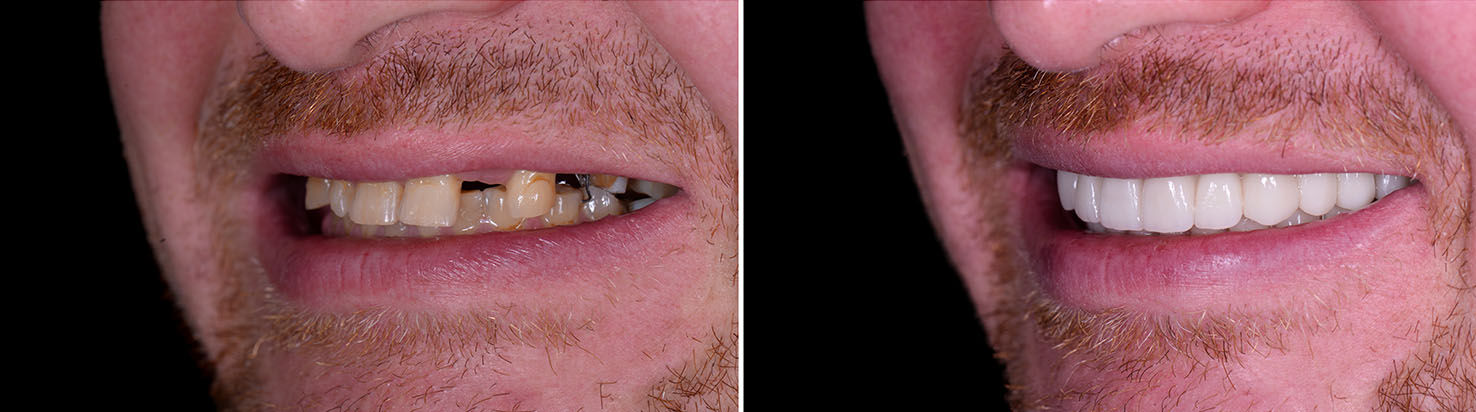
Clinical research shows that dental implants have a long-term success rate well above 95%. That success, however, depends on having enough healthy bone to hold the implant when it is placed.
Bone volume often decreases after a tooth is extracted or as a result of periodontal disease. A bone graft can rebuild that support. We may place the graft right in the extraction site or as a separate step before the implant, creating a strong base for a stable implant. If gum disease is a concern, our periodontal treatment can help get your gums healthy first.
Needing a bone graft is common and does not mean implants are out of reach. It simply adds a step to make sure your implant has the foundation it needs. We will let you know during your evaluation whether grafting is part of your plan.
Missing teeth affect more than the way your smile looks. Gaps can make it harder to speak clearly or chew healthy foods comfortably. Over time, the teeth next to an empty space can drift into it, changing your bite and putting the overall health of your mouth at risk.
Thanks to modern dental materials, technology, and techniques, replacing missing teeth with natural-looking, attractive results is easier today than ever.
At Corry Dental, we are proud to offer leading treatments that improve your oral health and give you a smile you will be happy to share. Our goal is to help you regain the complete smile you have lost, with personalized care for all of your oral health needs.
To learn more about dental implants or to schedule a visit so we can take a closer look at your smile, call our Cedar City office at (435) 586-6526 or request an appointment online. We are open Monday through Thursday from 8:00 am to 5:00 pm and Friday from 9:00 am to 1:00 pm. New to our practice? Visit our new patients page to see what to expect when you join the Corry Dental family.
Most patients are surprised by how manageable implant placement feels. It is usually considered a minor surgical procedure, and before treatment our team will review dental anesthesia and your sedation options so you can feel comfortable during the visit.
Some tenderness or swelling afterward is common while the area heals. Following your post-op instructions closely helps, and our team is available to answer questions so you always know what is normal during recovery.
Timelines vary from person to person. After an implant is placed, it typically needs a few months to bond with the surrounding bone, a process called osseointegration. If you need a bone graft first, that adds another step before placement.
Some options, such as full arch replacement, may allow temporary teeth on the same day, while others require complete healing before your permanent restoration is attached. Your dentist will explain which timeline fits your treatment plan.
The cost of implant treatment depends on your individual needs. Key factors include:
Because every plan is personal, our team will review your options during a consultation and consider your budget as part of choosing the right approach for you.
During the healing period, you may need to adjust what you eat to protect the treatment area while the implant bonds with your jawbone. Your dentist will give you detailed instructions on which foods are best and how long to follow them.
Once healing is complete and your final restoration is in place, implants let you chew comfortably and enjoy nearly any food, much like natural teeth.
Yes, many denture wearers are good candidates. An implant-retained denture snaps onto a few strategically placed implants, making it far more stable and less likely to slip. Another option is full arch replacement with four or six implants, which provides fixed teeth that are not removed for cleaning.
Our team will examine your jawbone and gums to see which option suits you best and whether any preparation is needed first.