Hearing that you need a root canal can feel unsettling, but there is no reason to worry. Modern root canal treatment is a routine procedure, and for most patients it feels much like getting a dental filling. In many cases, it is the best option for ending toothache pain, rescuing a damaged tooth, and keeping your natural smile intact.
At Corry Dental, we rely on the latest technology so we can deliver careful, precise, and gentle treatment. Your comfort guides every step of your visit, and our team is committed to helping you keep a healthy, attractive smile for years to come.
Many people picture root canals the way they were described decades ago. Dental tools, techniques, and numbing methods have come a long way since then. Today the goal of treatment is simple: remove the source of the pain, clean out the problem, and let you keep the tooth you already have.
On this page, you can learn why root canals are recommended, which symptoms to watch for, what happens during treatment, how to care for your tooth afterward, and answers to questions patients often ask.
Root canal treatment has a success rate of well over 90%. That track record makes it the most reliable way to save a tooth that has been badly weakened by decay or injury.
Keeping your natural teeth matters. They help you chew comfortably, speak clearly, and hold neighboring teeth in their proper positions, all of which support your oral health and overall wellness. That is why dentists so often recommend root canal therapy instead of pulling the tooth.
When a tooth is removed, the empty space can lead to other changes over time. Nearby teeth may drift or tilt toward the gap, your bite can shift, and replacing the missing tooth usually means another treatment such as a dental bridge or dental implant. Saving the original tooth avoids many of these concerns.
You are far from alone if you need this treatment. In the United States, root canals are performed close to 41,000 times every day, adding up to nearly 15 million procedures each year.

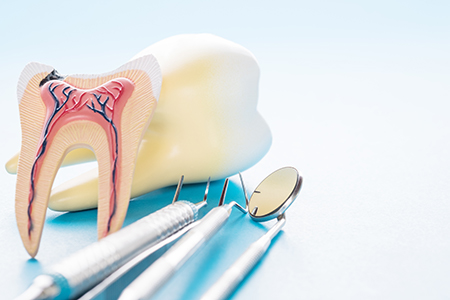
A tooth is more than its hard outer surface and its roots. Deep inside sits a hollow chamber filled with soft tissue called the dental pulp. The pulp contains connective tissue, nerves, and blood vessels, and it extends down through narrow channels inside each root. These channels are the "root canals" that give the treatment its name.
While a tooth is still forming, the pulp helps it grow and mature before it breaks through the gums. After the tooth is in place, the pulp keeps it nourished and alive, and its nerves warn you when something goes wrong.
When a tooth reacts to biting, chewing, or hot and cold foods and drinks, those nerves may be telling you that decay has set in, the tooth has been injured, or an infection is developing. How much it hurts usually depends on how severe the damage is and how deeply the nerve is affected.
A root canal becomes necessary when the pulp is damaged beyond repair or has died. The good news is that a fully developed tooth can keep working without its pulp. As long as enough healthy tooth structure remains and the surrounding bone offers good support, the tooth does not have to be removed. Your dentist can perform a root canal to save it.
Not every toothache means you need a root canal. Still, these warning signs are worth paying attention to:
Pain is your body's alarm system. Mouth pain has many possible causes, but one of the most frequent is decay or damage that has reached the living tissue inside a tooth. Many patients who need a root canal describe a toothache strong enough to wake them during the night.
If a warm cup of coffee or a cold drink makes you flinch, it is time to call our office. Strong sensitivity to temperature can mean the pulp is inflamed, irritated, or no longer alive. Pay special attention if the discomfort lingers after the food or drink is gone.
Tenderness when chewing, biting down, or even lightly touching a tooth can point to a problem with the pulp, lasting damage to the tissue inside, or an infection.
When a tooth turns darker, it often means the nerve and blood supply inside have been harmed. Teeth that were injured in the past may slowly change color as the inner tissue loses its vitality.
An injury that chips or breaks a tooth can also hurt the pulp. In some cases, so much of the tooth is lost that a root canal is needed to keep it.
Swelling in the gums around a tooth can be a sign of infection. The swelling may grow and lead to more serious problems, or an abscess may begin to leak pus. Either way, the tooth needs attention right away. Our emergency dental care page explains how to reach us when a problem cannot wait.
The infection or damage behind a root canal problem can wear away the bone that holds a tooth in place, causing it to feel loose. Root canal therapy can often correct this as the tissues heal.
If you notice one or more of these signs, make a note of when the discomfort started, what triggers it, and how long it lasts. These details can help our dentist pinpoint the cause more quickly during your visit.

Some of the signs above can also point to other dental problems, but every one of them deserves a timely visit. Getting checked early gives you the best chance of a simpler fix.
A tooth that needs a root canal does not always cause obvious symptoms. Sometimes the problem is first spotted during a comprehensive, routine exam. X-rays of these teeth often reveal changes at the tip of the root, known as periapical pathology, or other signs of structural damage. This is one more reason to keep up with regular checkups.
If a root canal is recommended, try not to put it off. Waiting raises the chance that symptoms will spread and become more severe. A dental infection can seriously harm your oral health and may even affect your general health.
It is also common for tooth pain to fade for a while, which can make it tempting to cancel or delay care. Unfortunately, pain that disappears does not always mean the problem has healed. Sometimes it means the nerve inside the tooth has died, while the infection remains. A quick evaluation tells you exactly where things stand.
Thanks to today's dental instruments and refined techniques, a non-surgical root canal is often about as comfortable as having a routine filling placed.
Some root canals are finished in a single visit, while others take 2 or 3 appointments. The timeline depends on details such as how many canals the tooth has, the shape of its roots, and whether an active infection is present. We will talk with you about what to expect for your specific tooth.
Here is a simple overview of the treatment:
Local anesthesia is the standard for root canal therapy. If dental visits make you nervous, ask us about dental sedation options that can help you feel more relaxed.
Throughout your appointment, we will check in with you and explain what is happening. If you need a break or feel any discomfort, simply let us know. Many patients find that knowing what to expect ahead of time makes the whole experience much easier.
At Corry Dental, we want you to feel comfortable and well informed from your first visit through your recovery. Our aim is to help you enjoy excellent oral health and to answer your questions along the way.
Here is what you can expect after treatment, along with tips for a smooth recovery:
Some numbness will likely linger after your appointment. Feeling usually returns within an hour or two. Until it does, take care not to accidentally bite your lips, cheeks, tongue, or gums. Be careful when chewing, avoid hot drinks, and hold off on smoking.
A root canal relieves the pain of a toothache, but you may notice mild to moderate soreness once the anesthetic fades. This typically eases within a few days. To keep extra pressure off the tooth, its biting surface may be smoothed slightly so it does not hit the opposing teeth as hard. We will suggest suitable over-the-counter pain relievers and provide a prescription if one is needed.
If you receive antibiotics to treat or prevent infection, take every dose as directed, even if you start to feel better before the prescription runs out.
Even with a temporary filling in place, a tooth that has had a root canal can break under stress until a permanent crown or other lasting restoration is placed. In the meantime, chew on the other side of your mouth when you can, and stay away from hard or sticky foods.
Being gentle with the treated tooth does not mean skipping your routine. Brushing and flossing every day helps prevent new problems and supports healing and long-term oral health.
A tooth that has had a root canal needs a permanent crown or other suitable restoration to regain its strength. Until then, what remains of the tooth is fragile and can crack. The sooner your permanent restoration is in place, the sooner you can bite and chew with comfort and confidence.
With good care and regular dental visits, a tooth treated with a root canal can last a lifetime.
It is natural to have questions before any dental treatment. Here are answers to a few that patients frequently ask.
The procedure is done with local anesthesia, so the area is numb while we work. Most of the pain people link with root canals actually comes from the infected or inflamed tooth before treatment. Removing the damaged pulp is what relieves that pain. Some tenderness afterward is normal and usually fades within a few days.
Extraction may seem quicker, but losing a natural tooth can create new problems with chewing, bite alignment, and the position of nearby teeth. Replacing a missing tooth also requires additional treatment. When a tooth can be saved, a root canal is generally the preferred choice. Our dentist will review your options with you so you can make an informed decision.
Once your tooth has been restored with a crown or another suitable restoration, it is designed to blend in with your smile. If a tooth has darkened from an old injury, ask us about ways to improve its appearance, including options covered on our cosmetic dentistry page.
Daily brushing and flossing, a balanced diet with fewer sugary snacks and drinks, and regular dental cleanings and exams all help catch decay before it reaches the pulp. Treating small cavities early with fillings is far simpler than treating a deep infection. For personalized tips, see our home care instructions page.
If you are new to our practice, our new patients page explains what to expect and how to prepare. Bringing a list of your symptoms, medications, and any questions you have will help us make the most of your appointment.
At Corry Dental, providing high-quality care is our commitment to every patient. If you have questions, lingering discomfort, signs of infection, or any other concerns after your procedure, please contact our office for prompt help.
Think you may need a root canal? Call us at (435) 586-6526 or request an appointment at our office at 427 S. Main St. in Cedar City. We are open Monday through Thursday from 8:00 am to 5:00 pm and Friday from 9:00 am to 1:00 pm. The sooner we see you, the sooner we can find the cause of your discomfort and help you keep your natural smile.
The cost of a root canal depends on several factors, including which tooth is being treated, how many canals it has, whether an infection is present, and what type of crown or restoration the tooth needs afterward. Front teeth usually have fewer canals than molars, which can affect the overall fee.
Our team will examine your tooth, explain your treatment plan, and go over expected costs before any work begins, so you can make a confident decision.
Many root canals can be completed in a single visit, while others need 2 or 3 appointments. The length depends on how many canals the tooth has, the shape of its roots, and whether there is an active infection that needs time to settle.
Your dentist will let you know what to expect for your specific tooth, so you can plan your schedule ahead of time.
Most patients feel well enough to return to their usual activities the same day or the next day. Keep in mind that numbness may linger for an hour or two, so be careful with eating, drinking hot beverages, and talking until feeling returns.
If you received sedation to help you relax, you may need more time to rest and someone to drive you home. Our team will give you guidance based on your visit.
Putting off treatment allows the infection or damage inside the tooth to keep progressing. Symptoms can spread and become more severe, an abscess can form, and the bone supporting the tooth may weaken. Over time, the tooth may become impossible to save.
Even if the pain fades, the problem may still be there, since a dying nerve can stop sending pain signals while infection remains. A prompt visit gives you the best chance of a simpler fix.
Yes. Corry Dental provides root canal treatment at our Cedar City office on S. Main St. If you have a lingering toothache, sensitivity to hot or cold, swelling, or pain when biting, our team can examine the tooth and determine whether a root canal or another treatment is the right choice.
We focus on gentle, precise care and will explain each step so you feel comfortable throughout your visit.